01
Licensed & Insured Independent Pros
Every call goes to an independent contractor carrying insurance and licensing where required. Ask for proof before work starts.
Water trickling through a wall crack, a pipe entry or a window well every time it rains? Call now and we'll connect you with an independent, licensed and insured contractor in Roxana who pinpoints the leak and seals it, without selling you a whole-basement system you don't need.
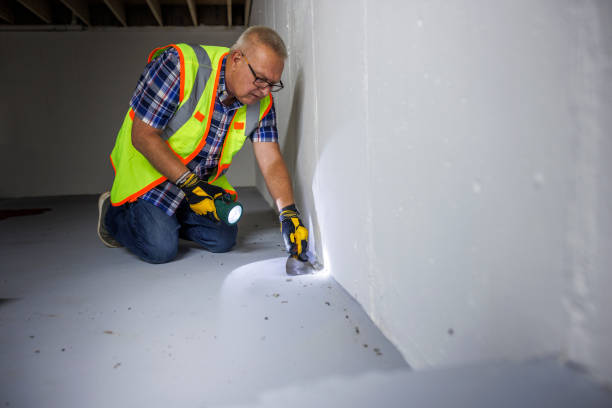
Not every wet basement needs a full drainage system. If water shows up in one predictable place, like a crack below a window, the gap around a sewer pipe or a corner under a downspout, you're dealing with a point leak. Those are usually faster and far less expensive to fix than a whole-basement problem.
The trick is finding the true entry point. Water can enter at a crack eight feet away and travel along the cove joint before it puddles where you notice it. It can run down inside a hollow block core and appear at the floor. A careful contractor traces it back before sealing anything, because sealing the wrong spot just moves the leak.
The contractors we connect you with in Roxana use moisture meters, infrared imaging and controlled hose tests to find exactly where water gets in.
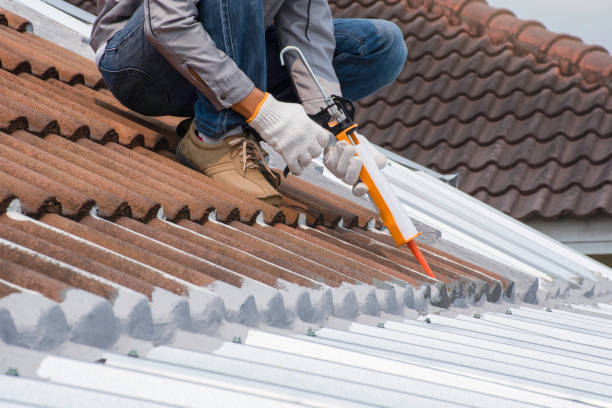
The visible puddle is rarely the whole story. A careful contractor starts at the wet spot and works outward, checking the wall above it, the cove joint on both sides and any pipes, windows or tie-rods nearby. A pin moisture meter shows how far the dampness spreads inside the concrete, which often points straight at the source.
Thermal imaging helps on finished walls. Wet areas behind drywall show up as cooler patches, so the contractor can see the path water takes without cutting into the wall. For block foundations, a borescope through a small hole can show whether the cores are holding water.
If needed, a hose test outside, one section at a time, confirms it. Water runs against one section of the outside wall for a set time while someone watches inside. Then the next section. It takes patience, but it pinpoints the exact entry point.
Once the source is confirmed, the repair is usually quick: injection for cracks, sealing for penetrations, a drain for window wells. If tracing shows water coming in at many points along the cove joint, the honest answer may be a drainage system for that section, and a good contractor will tell you so instead of injecting cracks that aren't the real problem.
Don't wait on a small leak. A crack that drips a little each storm keeps feeding moisture into the wall, the framing and anything stored nearby. Over a season or two, that can mean rusted tie-rods, rotting sill plates or mold behind finished drywall. Point repairs are at their cheapest when the leak is new and the surrounding material is still sound, so it's worth calling after the first drip rather than the tenth.

Finding and sealing one leak properly takes the right approach.
Every call goes to an independent contractor carrying insurance and licensing where required. Ask for proof before work starts.
Most point repairs are quoted per crack, per penetration or per window, in writing, before work begins.
Active leaks in Roxana are prioritized, and many single-crack repairs are finished on the first visit.
Injection rigs for polyurethane and epoxy, thermal cameras and moisture meters for tracing.
Match the repair to the leak and it holds for good.
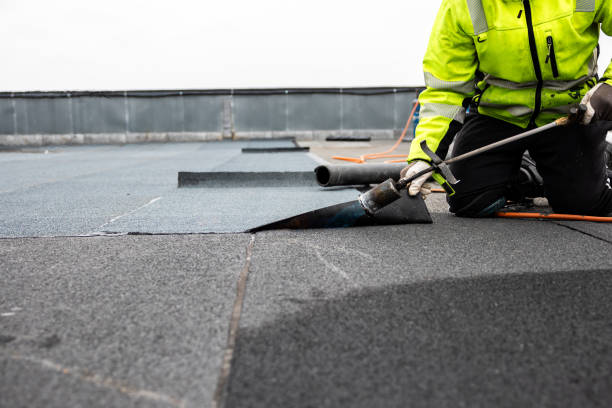
Expanding polyurethane injected under low pressure fills the crack front to back and stays flexible.
When a crack is dry and structural strength matters, epoxy bonds the concrete back together. Contractors choose it for cracks that aren't actively flowing at the time of repair.
The gaps around sewer lines, water mains and conduit are classic leak points. Contractors clean out loose material and seal with injection foam, hydraulic cement or a flexible sealant that tolerates movement.
A proper well drain, gravel, a cover and a resealed frame stop water from pooling at the window.
Water rising at the floor-to-wall joint or through slab cracks is usually groundwater pressure. Short sections can sometimes be addressed locally, but widespread cove joint seepage often points to a drainage solution.
Rusting form ties let water in at regular intervals. Each one is cleaned and sealed individually.
Point repairs are the right answer when the water truly enters in one or two places. But sometimes tracing reveals a pattern: seepage at the cove joint along most of a wall, several cracks leaking at once, or water rising through the slab in more than one spot. That usually means the soil around the foundation is saturated and hydrostatic pressure is pushing everywhere, not just at one weak point.
In that case, injecting one crack at a time can become an expensive cycle, because each repair just moves the pressure to the next weak spot. An honest contractor will tell you when you've reached that point and explain the options, from a partial drain tile run along one wall to exterior grading changes that reduce the water load. You still decide. The aim is to spend your money on the fix that actually stops the leaks, not on a series of patches that each work for one season.
It also helps to keep a simple log. Note the date, the weather and where water showed up each time it happens. Three or four entries give a contractor a clear picture of whether you have one stubborn leak or a pattern that points to a bigger drainage problem, and it often shortens the inspection.
Most point leaks are resolved quickly. Here's the sequence.
Call +1-866-476-1348 and describe exactly where you see water and what the weather was doing. Photos of the spot help a lot.
A local independent contractor schedules a visit, often the same or next day for active leaks.
The contractor traces the leak with moisture readings, thermal imaging or a hose test, then quotes the repair in writing.
The leak is sealed, often in a single visit, and the contractor explains how to check it after the next rain and what the warranty covers.
Call now for a free referral to a licensed, insured independent basement leak repair contractor in Roxana.
Call +1-866-476-1348We had one crack that dripped every rainstorm. Another company quoted a full drain system. The contractor from this line injected the crack in about two hours and it hasn't leaked since.
Ruth K., Roxana
The leak showed up in the middle of the wall, but he found it was actually coming in around the sewer pipe and running along the joint. Sealed the pipe and done.
Marcus J., Roxana
New well drain, gravel and a cover fixed a leak we'd had for years.
Elena T., Roxana
Called on a Saturday with water coming through a crack. Contractor came Sunday and fixed it on the spot. Fair price.
Jim W., Roxana
Yes, if the water is truly entering at that one crack. Injection seals the crack through the full wall thickness. If water is coming in at many points, a broader solution may make more sense, and a good contractor will say so.
Water travels along the cove joint, down hollow block cores and behind finished walls before it shows up. That's why tracing comes before sealing.
It works well for plugging active leaks and tie-rod holes, but it's rigid, so it can crack again if the wall moves. For moving cracks, flexible polyurethane injection usually lasts longer.
Point repairs are generally in the hundreds per location. The contractor will quote your specific repair in writing.
DIY kits exist, but surface sealing from inside often fails because the water still reaches the crack from outside. Professional injection fills the crack through the whole wall.
Call the contractor first, since most warranty their injection work. If it's a new leak elsewhere, that may point to a bigger drainage issue.
Calls from across Roxana and surrounding communities reach local independent leak repair pros. Poured, block and stone foundations are all covered.
See the zip codes and nearby cities below, or call to confirm.