01
Licensed & Insured Independent Pros
Calls go to independent contractors who carry structural-work liability coverage and hold licensing where required. Many jobs also need a building permit, so ask who pulls it.
Stair-step cracks, a bowing wall or doors that suddenly stick? Call now and we'll connect you with an independent, licensed and insured foundation repair contractor in Lindale who can measure the movement and explain your options honestly.
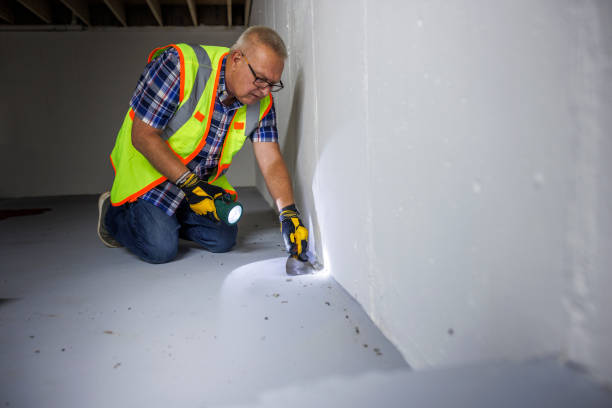
Foundations move for two basic reasons: the soil under them shifts, or the soil beside them pushes. When soil under a footing dries out, washes away or was poorly compacted to begin with, part of the house settles. That shows up as diagonal cracks running up from window corners, gaps above door frames and floors that slope toward one side.
Pressure from the side tells a different story. Saturated clay or frozen soil pushes against basement walls, and block walls answer with a horizontal crack along a mortar joint or a stair-step pattern climbing toward a corner. Poured walls tend to bow inward at the center. Neither one tends to fix itself, and the repair cost grows with the movement.
Most cases can be stabilized in place. The key is measuring what's actually happening before anyone sells you a method.
Crack patterns are a surprisingly reliable diagnostic tool. A diagonal crack that's wider at the top usually means one end of the wall is dropping. A crack that's wider at the bottom can point to heave, where expanding soil pushes upward. Vertical cracks that are the same width top to bottom are often harmless shrinkage from when the concrete cured.
Horizontal cracks are the ones that deserve the fastest attention. They form when soil pressure on the outside pushes the middle of the wall inward. In cold climates, frost adds to that load every winter. In clay soils, the wall gets pushed every time the ground soaks up rain. Measuring how far the wall has deflected decides the fix: carbon fiber for minor bowing, braces or anchors for more, and excavation for walls that have moved too far.
With settlement, the fix goes under the house, not against the wall. Piers transfer the load from weak surface soil to stable strata deeper down. An elevation survey before and after shows exactly how much the house has dropped and how much was recovered.
The cost of foundation work is driven mainly by how many piers, anchors or straps the job needs, plus access, permits and engineering. That's why a measured assessment, not a phone guess, is the only way to get a real number.
Foundation repair is one area where a wrong guess costs real money.
Calls go to independent contractors who carry structural-work liability coverage and hold licensing where required. Many jobs also need a building permit, so ask who pulls it.
Expect written pricing by the pier, anchor or carbon fiber strap, so the scope is clear before work begins.
When cracks are widening fast or a wall is visibly moving, contractors in Lindale can usually get out quickly to assess and, if needed, install temporary shoring.
Digital manometers or laser levels for elevation surveys, crack gauges, hydraulic pier drive systems and torque-monitored helical installers.
Each method solves a specific kind of movement. Here's how they differ.
Steel piers are pressed down to competent soil beneath the footing, then the structure's weight is transferred onto them, sometimes recovering lost elevation.
Screw-shaped steel shafts are turned into stable soil, and installation torque tells the installer how much load each one carries. Ideal for additions and lighter loads.
A steel plate inside the basement connects through the wall to an anchor plate buried in stable soil out in the yard. Tightening over time can stop bowing and, in some cases, gradually pull the wall back.
For walls with minor bowing, under about two inches, carbon fiber straps epoxied to the wall at regular spacing lock it in place. They sit nearly flush, so you can still finish the basement.
Steel beams bolted between the slab and the framing brace walls that have moved too far for carbon fiber.
Once movement is stopped, structural cracks are sealed with epoxy injection. Walls that have failed beyond bracing may need excavation and partial rebuild, usually with an engineer's plan.
Most foundation problems develop slowly, over seasons or years. A few don't. If a wall has a fresh horizontal crack with displacement, if mortar is falling out of block joints or if the wall is visibly leaning more than it was a few weeks ago, it may need temporary shoring before the permanent repair is scheduled. Contractors can set adjustable steel posts or timber bracing against the wall to hold it while the engineering and permits get sorted out.
Until a professional has looked at it, keep heavy vehicles and equipment away from that side of the house, don't stack firewood or soil against the outside of the wall, and redirect downspouts away from it so the soil doesn't get any wetter. Avoid patching the crack yourself, because the contractor will want to see how it has moved. Take dated photos with a tape measure in the frame. That record helps the contractor and any engineer understand how fast things are changing, and it can matter if you ever need to talk with your insurer.
Once the permanent repair is installed, keep watching. Mark crack ends again, check doors and windows for sticking and note any changes after big storms or dry spells. Most stabilization systems come with written warranty terms, and a simple record of what you see makes any warranty conversation much easier.
A measured process protects your house and your budget.
Call +1-866-476-1348 and tell us what you're seeing: cracks, bowing, sticking doors or sloping floors. Photos help, so have some ready.
A local independent foundation contractor schedules a visit, with urgent priority if a wall is actively moving.
The contractor measures crack widths, runs an elevation survey and checks walls for plumb, then explains the cause and gives you a written quote. Major movement may call for a structural engineer first.
After installation, you'll review final measurements, warranty terms and any maintenance like anchor tightening.
Call now for a free referral to a licensed, insured independent foundation repair contractor in Lindale.
Call +1-866-476-1348Our back corner had settled almost an inch and the kitchen door wouldn't close. The contractor ran a full elevation survey, installed push piers and recovered most of it. The door latches again.
Victor H., Lindale
He told us our bowing wall was within carbon fiber range and didn't try to upsell anchors. The straps went on in a day and the wall hasn't budged since.
Natalie G., Lindale
I was nervous about the horizontal crack in our block wall. The contractor recommended an engineer, waited for the report, and then installed wall anchors exactly as specified.
Sam O., Lindale
Called after a crack widened during a drought. Fast visit, written quote and very tidy work outside.
Rachel F., Lindale
Hairline vertical cracks in poured walls are usually shrinkage and mostly cosmetic. Horizontal cracks, stair-step cracks in block, cracks wider than about a quarter inch or anything that's growing deserves a professional look soon.
Sometimes. Push piers can often recover some or most lost elevation, but how much depends on the structure and how long it's been settled. A good contractor will tell you what's realistic before starting.
For major movement or rebuild work, yes, and many permits require one. Some contractors coordinate the engineer visit for you.
Wall reinforcement typically takes one to two days. Pier jobs often take two to five days depending on the number of piers and access.
Stabilizing a wall doesn't automatically make it watertight. Stabilization stops movement, but water management is often needed too. Many contractors pair wall repair with drain tile or crack injection.
Usually not for gradual settlement, but check your policy and talk with your agent. Keep the contractor's report for your records either way.
Calls from across Lindale and surrounding communities go to local independent foundation specialists. That includes block, poured concrete and stone foundations, plus slab homes with settlement.
See the zip codes and nearby cities below, or call to confirm coverage.