01
Licensed & Insured Independent Pros
Calls go to independent contractors carrying liability coverage and licensing where required, including those who work with builders on new construction.
Foundation walls wicking moisture, weeping at tie-rod holes or showing efflorescence? Call now and we'll connect you with an independent, licensed and insured contractor in Brooksville who seals foundations below grade, for new builds and existing homes.
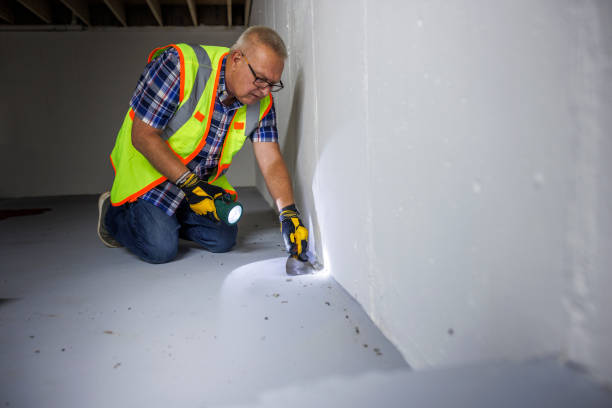
Many builders apply only a thin asphalt damp-proofing coat, which code allows but which doesn't stop water under pressure. Damp-proofing slows vapor. It doesn't bridge cracks, and it breaks down over time in wet soil. Once the soil around the house saturates, water pushes through shrinkage cracks, tie-rod holes, form joints and pipe penetrations.
Concrete block is even more vulnerable. The mortar joints and hollow cores soak up moisture, which shows up as white efflorescence, peeling paint and a constant damp feel. Foundation waterproofing treats the wall itself as the barrier, using membranes, sealants and drainage layers designed to hold back water, not just vapor.
On new construction, the best time is before the backfill goes in. For existing homes, contractors can excavate and retrofit, or combine targeted exterior work with interior drainage.
The site decides the system. A house on sandy, well-drained soil with a low water table needs good protection and a working footing drain, but it isn't fighting constant pressure. A house on dense clay, a low lot or a site with a seasonal high water table has water sitting against the wall for weeks. That second house needs a heavier membrane, a drainage board with real flow capacity and a footing drain that can keep up.
Fluid-applied membranes are the most common choice for residential work. They go on seamless, wrap around tie-rods and penetrations, and bridge hairline cracks. The key quality check is thickness: the crew should measure wet film thickness as they go, because a membrane applied too thin won't perform as rated.
Sheet membranes and bentonite systems show up more on commercial jobs and difficult sites. Sheets give a consistent factory thickness, which helps on large wall areas. Bentonite swells when it gets wet and seals small gaps on its own, though it needs to be confined by backfill to work properly.
No membrane works well without drainage. Drainage board and a footing drain take the pressure off, so the membrane only has to deal with water that's already moving away. Skipping drainage to save money is one of the most common reasons foundation waterproofing fails early.
What drives the price is mostly how hard the wall is to reach. On new construction, with the walls already exposed, you're paying for materials and application. On an existing home, excavation, hauling, shoring for deep trenches and restoring landscaping usually make up the larger share of the bill. A contractor should break those pieces out separately so you can see where the money goes, and so you can compare a full-perimeter job against sealing only the walls that actually leak.
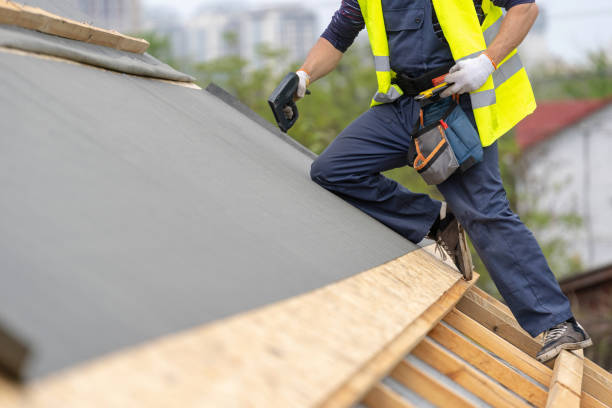
Foundation waterproofing is a materials job as much as a labor job.
Calls go to independent contractors carrying liability coverage and licensing where required, including those who work with builders on new construction.
Pricing is written by wall section or linear foot, with membrane type, drainage board and footing drain called out separately.
Local contractors can fit tight construction schedules and respond fast to active leaks.
Spray equipment for rubberized membranes, mil gauges to check thickness, surface prep gear and injection ports for tie-rods.
A complete job layers protection so water has no easy path through.
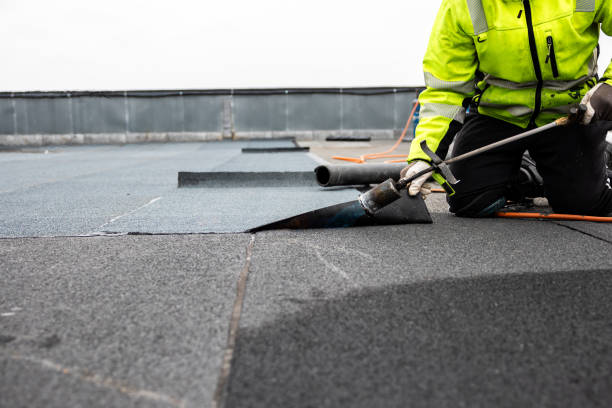
A thick, seamless rubberized asphalt or polymer membrane is sprayed or rolled onto the cleaned wall at a specified mil thickness. It stretches to bridge small cracks that would split ordinary damp-proofing.
Self-adhering sheet membranes give a consistent factory thickness, and bentonite clay panels swell when wet to seal themselves. Both are common on commercial foundations and high water table sites.
Drainage board shields the membrane and channels water straight down to the footing drain instead of letting it sit against the wall.
Perforated pipe in a fabric-wrapped gravel bed along the footing collects water and carries it to a sump or to daylight. Without it, even the best membrane faces constant pressure.
Tie-rod holes, pipe sleeves and conduit entries are the most common leak points in poured walls. Contractors seal them with hydraulic cement, polyurethane injection or flexible sealant collars.
Block walls are often parged with a cementitious coat before membrane application to fill mortar joints and create a smooth surface for proper adhesion.
Most foundation waterproofing failures trace back to a handful of shortcuts. The first is skipping surface prep. A membrane applied over dirt, loose parging or form release oil won't bond, and water gets behind it within a few seasons. The second is applying it too thin. Fluid membranes are rated at a specific thickness, and a crew in a hurry can easily put on half that.
The third is leaving out the drainage board, which lets sharp backfill puncture the membrane and leaves water pressing against the wall instead of draining down. The fourth is a footing drain with no outlet, or one that discharges into a spot that floods. The last is backfilling with the same clay that came out of the hole, which holds water against the wall. A contractor who explains how they avoid each of these is one who has seen what happens when they're ignored.
On an existing home, ask the contractor how they'll protect the membrane during backfill, where the footing drain will discharge and how the final grade will slope. Those three answers tell you more about the quality of the job than the brand name on the membrane bucket.
Whether it's a new build or a retrofit, the steps are straightforward.
Call +1-866-476-1348 and describe the foundation type, the moisture and your timeline.
A nearby contractor confirms a visit, working around construction schedules when needed.
The contractor inspects the walls, checks soil and drainage conditions, recommends a membrane system and gives you a written quote.
After application and drainage install, you'll get photos before backfill and a walkthrough of the warranty terms.
Call now for a free referral to a licensed, insured independent foundation waterproofing contractor in Brooksville.
Call +1-866-476-1348Our builder planned on damp-proofing only. We upgraded to a membrane and drainage board, and the basement has stayed dry since day one.
Jordan P., Brooksville
Three snap-tie holes leaked every storm. They were injected in an afternoon and haven't leaked since.
Mei L., Brooksville
Our old block foundation was always damp and chalky. They excavated one side, parged it, put on a membrane and new footing drain. Night and day difference.
Carl B., Brooksville
Clear quote, showed up when promised and sent pre-backfill photos without me even asking.
Ana V., Brooksville
Damp-proofing is a thin asphalt coating that slows vapor but can't handle water pressure or bridge cracks. Waterproofing uses thicker, flexible membranes designed to stop liquid water under hydrostatic pressure.
Yes. The contractor excavates to the footing, cleans and repairs the wall, then applies a membrane, drainage board and footing drain before backfilling. It's more involved than interior work but stops water at the source.
Properly installed and protected membranes are built to last for many years. Ask the contractor for the manufacturer's rated lifespan and the written warranty terms.
It's the cheapest moment to do it. The walls are already exposed, so you're paying for materials and labor, not excavation. Retrofitting later costs far more.
Often. Interior injection is a common, effective fix. If many points leak, a broader solution may be more cost-effective.
It depends on your local building department and the scope. Excavation, drainage tie-ins and structural repairs are the most likely to need one, so ask the contractor who handles it.
Calls from all over Brooksville and nearby areas reach local independent contractors who seal foundations below grade. That covers new construction, additions and existing homes.
Check the list below or call to ask about your area.