01
Licensed & Insured Independent Pros
You're connected with insured, independent contractors, licensed where required, who handle the full install.
Water seeping in where the wall meets the floor? Call now and we'll connect you with an independent, licensed and insured interior waterproofing contractor in Holt who installs drain tile, a sump system and wall membranes without digging up your yard.
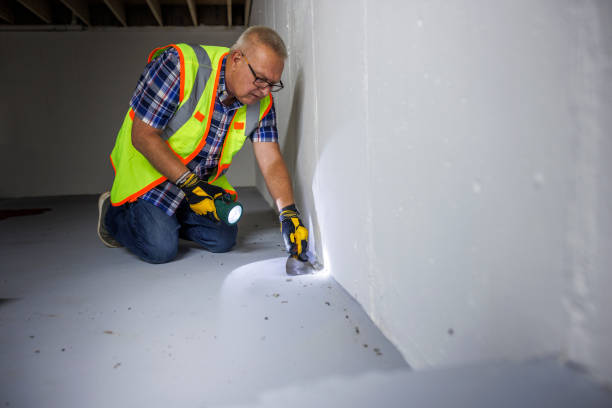
Basements go up in separate pours: footing, then walls, then the floor. The seam where the slab meets the wall, called the cove joint, is never truly sealed. It's a cold joint between two separate pours. When groundwater rises around the house, hydrostatic pressure pushes water up through that seam and through the gap between the footing and the slab.
That's why so many wet basements show water along the bottom edge of the wall first. Sealing the joint from inside rarely works for long, because the pressure behind it doesn't go away. Interior waterproofing takes a different approach: it gives the water a controlled path to a sump pump, so the pressure never builds high enough to push water onto the floor.
It's the go-to fix for most existing basements. It's installed entirely from inside, works in any season and costs considerably less than excavating around the whole house.

Interior drainage systems fail for predictable reasons, and almost all of them come down to installation shortcuts. The first is a trench that doesn't go deep enough. The drain tile needs to sit beside the footing, not just under the edge of the slab, or water still finds its way up through the cove joint.
The second is cheap backfill. Drain tile should be bedded in washed, clean stone so water flows freely. Dirty gravel or reused soil clogs the pipe over time. Some systems also use a filter fabric sleeve on the pipe to keep fine silt out.
Then there's slope and routing. The drain tile has to slope toward the sump, and a long basement may need more than one sump or a cleanout port for future flushing. Ask the contractor how many access points the system has.
Finally, the pump has to match the water. An undersized pump runs constantly and burns out early. An oversized one short-cycles. A contractor who sizes the pump to your actual inflow and lift height, and adds a backup, is building a system meant to last.

Good interior drainage comes down to careful installation.
You're connected with insured, independent contractors, licensed where required, who handle the full install.
Written quotes are priced by the linear foot of drain tile, plus the sump package, membrane and any weep holes, with nothing hidden.
Local scheduling is usually quick, with prompt inspections and short lead times on installs.
Slab saws with dust control, jackhammers, air scrubbers and containment sheeting keep the mess down.
These parts work together as one drainage system.
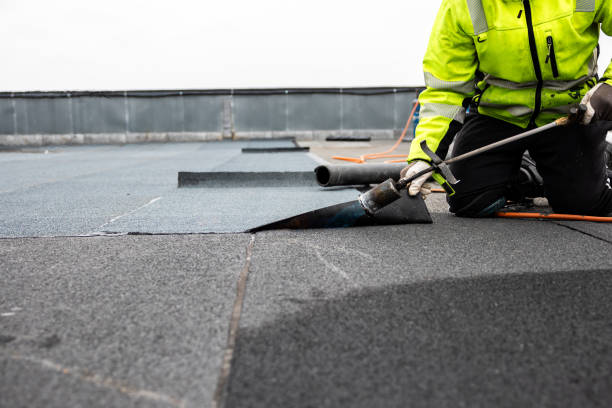
Perforated pipe is set in clean stone in a trench beside the footing, then covered with fresh concrete, leaving a drainage gap at the wall.
All the drain tile feeds a lidded basin, where a properly sized submersible pump discharges the water outside.
A dimpled plastic membrane is fastened to the wall and tucked into the drain channel. Seepage through the wall runs down behind it into the drain tile, and the wall stays dry on the room side.
In block foundations, small holes drilled into the bottom of each core let trapped water drain straight into the new system instead of pushing out through the face of the wall.
A second pump on battery power takes over during outages or if the primary pump fails. A high-water alarm warns you before water reaches the floor.
The discharge line exits through the rim joist and runs well away from the foundation. A freeze guard fitting lets water escape if the outside line ices over.
Interior drainage is usually priced by the linear foot of drain tile, so the size of the basement and how many walls need treatment set the baseline. A partial run along one wall can cost a fraction of a full perimeter. Foundation type matters next, since block walls need weep holes and poured walls don't. Obstacles add labor: finished walls that must be opened, stairs, built-in shelves, the furnace and water heater sitting close to the wall.
The sump package changes the price as well. A single pump in a new basin is the baseline, a battery backup and alarm add to it, and a basement with heavy inflow may need two pumps or two pits. Wall membranes, dehumidifiers and electrical work for a dedicated pump circuit are often separate lines. Ask the contractor to mark the drain tile route and sump location on a sketch so you can compare quotes on the same layout.
It's also worth asking what happens to the concrete and debris. Breaking out a perimeter strip produces a surprising amount of rubble, and hauling it away should be included in the quote. So should the final floor patch, dust containment and cleanup. If you plan to finish the basement later, mention it at the start, because the contractor may suggest a wall membrane or a slightly different drain layout that makes finishing easier and protects the new walls from day one.
Most interior installs take one to three days. Here's how it goes.
Call +1-866-476-1348 and tell us where and when the water appears and what's along the walls.
A local independent contractor confirms a visit, often within a day or two.
The contractor measures the perimeter, inspects walls and floor, recommends where drain tile and the sump should go and gives you an itemized written quote.
After install, the contractor shows you how to test the pump, what the alarm sounds like and what the warranty covers.
Call now for a free referral to a licensed, insured independent interior waterproofing contractor in Holt.
Call +1-866-476-1348We used to get seepage along the floor edge every spring. After drain tile and a sump with backup went in, the floor has stayed dry.
Mike B., Holt
They contained the dust with plastic and an air scrubber, and cleaned up completely.
Linda Q., Holt
Weep holes, membrane and drain tile turned our damp block basement into a space we can finish.
Chris N., Holt
Two-day job, clear quote, no surprises. The contractor showed me how to test the pump and the backup before he left.
Sofia R., Holt
It collects water beside the footing in perforated drain tile, before it reaches the floor, and channels it to a sump pump that discharges it outside. It relieves the pressure that forces water through the cove joint.
You'll see a new concrete strip along the edge. In finished basements it's usually hidden under flooring and baseboard. In unfinished spaces it's visible but clean.
Usually the bottom portion of drywall and framing along the affected walls must be removed so the trench can be dug and the membrane installed. If you want to avoid that entirely, ask about exterior waterproofing.
It's noisy during cutting, but containment keeps dust out of the rest of the house. Most families stay home during the work.
Very little. Test the sump pump a couple of times a year, keep the discharge line clear and replace the backup battery as recommended. Some contractors offer annual service checks.
Yes, partial runs are common. The contractor will tell you whether a partial run will do the job or just push water to the next wall.
Calls from across Holt and surrounding communities reach local independent interior drainage pros. Poured, block and stone foundations are all covered.
Contractors who work around Holt know the local foundation types well and plan each drain tile layout and sump location to match.
Check the area list below or just call to ask.